I Didn’t Set Out to Build a Delivery App. I Set Out to Fix Access
Ebenezer Oyinlade
December 16, 2025
After a while, frustration stops being emotional and starts becoming analytical.
That shift happened for me shortly after a very personal realization. When my wife was pregnant and grocery shopping became my responsibility, I experienced firsthand how convenience worked perfectly, until culture entered the picture. That moment didn’t just surface a problem. It forced me to examine why it existed.
Once you live long enough with a recurring issue, especially one technology claims to have solved, you start asking different questions. Not why is this annoying, but why does this keep happening, and who is this system really built for?
Access to ethnic groceries was one of those problems.
Even as food delivery platforms expanded rapidly across the U.S., access to African and Caribbean groceries remained inconsistent. Stores existed, but they were often far apart. Delivery coverage was limited. Pricing felt inflated. And the experience assumed proximity most immigrant communities simply didn’t have.
Most delivery platforms are designed around density, short distances, high order frequency, and quick turnover. That model works well in city centers and for mainstream grocery chains. It breaks down quickly when applied to ethnic grocery stores that are fewer in number, spread farther apart, and serve customers who already expect to travel long distances for the right products.
Distance wasn’t the exception. It was the reality.
That realization reframed everything. Delivery wasn’t the real problem, access was.
When I began validating what would become ETNOWE, I wasn’t testing whether people wanted delivery. That was already clear from lived experience. I was testing whether people wanted reliable access, even if that meant delivery up to 25 miles or pickup as far as 50 miles.
The answer was consistent.
People weren’t asking for speed at all costs. They were asking for coverage, fair pricing, and a system that reflected how they already shopped in real life, often out of necessity, not preference.
Affordability mattered just as much. On many existing platforms, ethnic food comes with a premium. ETNOWE was intentionally designed differently. On average, orders on ETNOWE are about 20% cheaper, not because of discounts, but because pricing was treated as a product decision from the beginning.
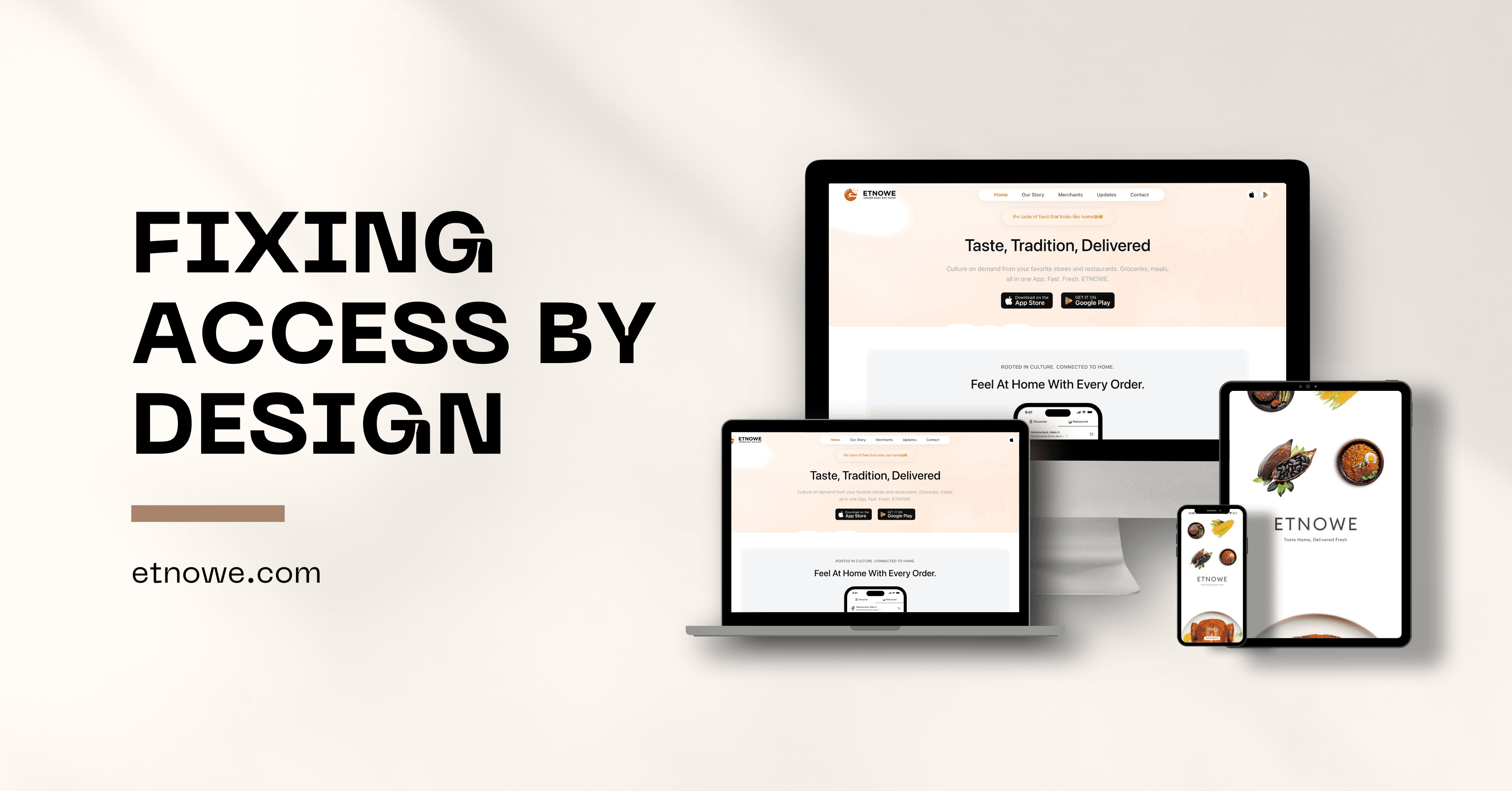
Looking back, I didn’t build ETNOWE because I wanted to enter the delivery space. I built it because the delivery space wasn’t solving access where it mattered most, especially when responsibility made the gap impossible to ignore.
Access isn’t accidental. It has to be designed for.
That’s what ETNOWE continues to do.
If this perspective resonates, experience what we’re building. On iPhone? Download the ETNOWE app on the Apple App Store. On Android? Get the ETNOWE app on Google Play. Access the groceries and meals you actually want, without distance or cost becoming the barrier.