Why Multicultural Grocery Delivery Is a $50B Blind Spot
Ebenezer Oyinlade
March 31, 2026
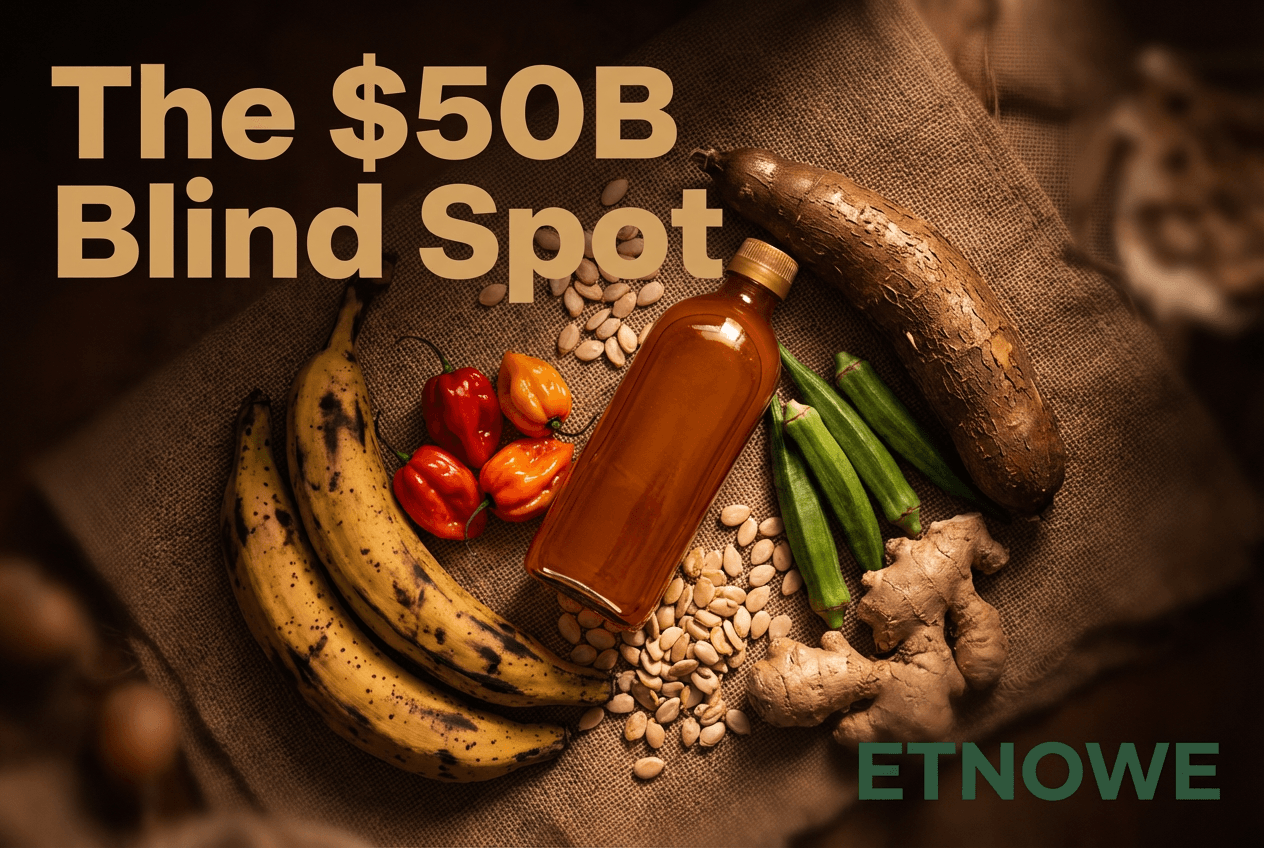
The U.S. ethnic food market generates over $50 billion a year. That number keeps growing. And yet, if you ask most people in tech where the next big opportunity in food delivery is, they will talk about speed. Drone delivery. AI-powered recommendations. Fifteen-minute windows.
Almost nobody talks about the 60 million people in this country whose groceries never made it onto the platform in the first place.
I think about this constantly. Not because I read a report. Because I lived it.
When I was doing the grocery runs for my family, the mainstream apps worked beautifully for anything you'd find at a Walmart or a Kroger. I could order, schedule a pickup, and move on with my day. But the moment I needed palm oil, or plantain, or egusi, everything stopped working. Not because the technology couldn't handle it. Because nobody thought to include it.
That's the blind spot.
The U.S. food delivery market has been valued at over $350 billion. Companies have raised hundreds of billions in venture capital to make grocery shopping faster and more efficient. But almost all of that investment has been directed at mainstream grocery chains serving a mainstream consumer profile.
Meanwhile, immigrant communities across the country are doing what they have always done. Driving 30, 40, sometimes 50 miles to reach the one store that carries what they need. Spending entire afternoons on grocery runs that should take 20 minutes. Paying more for less, because there is no alternative.
This is not a niche. It is a market that has been mislabeled as one.
The African diaspora alone represents over 2 million people in the U.S. Caribbean communities add millions more. South Asian, East Asian, Latin American, Middle Eastern. Each community has its own grocery ecosystem, its own stores, its own supply chains. And each one is underserved by the same platforms that claim to deliver everything.
The gap is not about willingness to pay. These communities spend heavily on food. Groceries are central to daily life, to cultural identity, to how families stay connected across generations. The spending is there. The infrastructure is not.
What makes this even more striking is how invisible the problem remains.
If you look at how major delivery platforms categorize food, you will see Asian, Mexican, maybe Indian as cuisine filters for restaurants. But grocery delivery for these communities? It barely exists on their radar. And when it does, it is an afterthought. Limited selection, inflated prices, delivery zones that do not reach where people actually live.
This is a $50 billion market operating almost entirely offline. Not because the customers prefer it that way. Because the platforms never built for them.
I founded ETNOWE because I saw this gap from the inside. Not as a market analyst. As a customer who could not get his groceries delivered. As a husband trying to handle the household while his wife was pregnant. As someone who kept asking why the apps that worked for everyone else did not work for us.
The opportunity here is not just commercial. It is structural. The communities being underserved are growing faster than the general population. Immigration continues to rise. Second and third generation families still cook the foods they grew up with. The demand is not going anywhere. If anything, it is compounding.
And the companies best positioned to capture it are not the ones with the most funding or the fastest delivery times. They are the ones that understand the customer. That build for distance, not just density. That treat affordability as a feature, not a promotion.
That is what ETNOWE is doing. We have been operating for three years now, across multiple states, with orders that average about 20% cheaper than what you would find on the major platforms. Not because we discount. Because we designed the economics differently from the start.
The $50 billion blind spot is not hidden. It is sitting in plain sight, in every immigrant neighborhood in America. Someone just has to build for it.
We are.
If this resonates, experience what we are building. On iPhone? Download the ETNOWE app on the Apple App Store. On Android? Get the ETNOWE app on Google Play. Access the groceries and meals that matter, without distance or cost becoming the barrier.